Kevin Chan: So many players get given so much new gear, probably on a game to game or season to season basis and they want to relive those memories but don't know how. Big brands want those authentic stories and it's not easy for them to replicate. It's not the same when you've got a brand who lives and breathes upcycling in circularity.
Keith Chan: Let's say they want to propose to send in a brand new jersey, but we would actually tell them what's wrong with the jersey? Why can't you wear it?
[Voiceover]: Welcome to ADD to Cart Australia's leading e commerce podcast that express delivers all you need to know in the fast moving world of online retail. Here's your host, Bushy.
Nathan Bush: Welcome to ADD to Cart Australia's leading e commerce podcast for e commerce professionals who never stop learning.
Speaker E: My name is Nathan Bush or Bushy,
Nathan Bush: joining you from the land of the terrible people here in Brisbane. Now, I want you to imagine this. You're interning at a global sportswear giant. You're working on football boots kits and you're a little swept up in the football hype. But then you see what happens behind the scenes. Mountains of unused gear, samples tossed out, kits destined for landfill. Most people would walk away and try and ignore it, but not Kevin and Keith Chan. The these identical twins from Brisbane took that waste and turned it into a movement and it's called Unwanted fc. They upcycle old football kits into boot bags, bum bags, wallets, side bags, football bags, giving unwanted gear a second life with a bit of style and a bit of soul. And this isn't just some little startup or some little idea. They've already partnered with Nike creating custom pieces for Premier League players and even landed on Nike's homepage during the Women's World Cup. No big budget, no factory line, no VC war chest. Just stitching purpose into every product. In this chat, we dive deep into what it looks like to build a brand like this from scratch. One that's sustainable, scalable and deeply personal. You're going to hear today what happens when one twin goes full time while the other keeps the side hustle alive. How they scale a custom product model without sacrificing values. What they've learned from athlete partnerships, upcycling mistakes and digital PR. And how they're using Shopify, Monday.com and Canva to run lean, smart and global. If you're in your first few years of e commerce, dreaming of turning your side hustle into your day job, or you're obsessed with circularity and sustainability or you just love fresh ideas in E commerce. This one's for you. Don't miss our upcoming Bootcamp Reset and scale. It's a meta bootcamp. I'm teaming up with Ian Calvert from Boom E Commerce to help you get your meta ads back on track and to give you you confidence in your ad setup. Whether you are working with an agency, have a team behind you or you're working solo, we're going to talk you through how to clean up your campaigns, master your creative and measure results for
[Voiceover]: profitability to set you up for success.
Nathan Bush: It kicks off June 23rd.
[Voiceover]: Four weeks.
Nathan Bush: 100% practical, all virtual. You can grab your spot now@addtocart.com or via the link in the show notes. A massive thanks to our partners Shopify and Klaviyo for making this episode and our podcast possible. Now let's get right into this story of grit, family and football with the very grounded, very clever Kevin and Keith Chan from Unwanted fc.
[Voiceover]: Kevin and Keith, welcome to ADD to cart.
Kevin Chan: Hello, Bushy, thanks for having us.
Keith Chan: Hi Bushy.
[Voiceover]: Look, thank you for coming on. You're actually a first for us after 500 episodes. Our first identical twins.
Kevin Chan: Wow. So many episodes. You've had siblings on before.
[Voiceover]: I think we've had siblings, but no identical. I don't think we've even had twins, to be honest.
Kevin Chan: Wow.
[Voiceover]: There you go.
Kevin Chan: Next level, double trouble, boys.
[Voiceover]: We are here to talk about Unwanted fc, which is your brand, your baby and I got introduced to you via Ali at Convert Digital. She was nice enough to connect us and as soon as she showed it to me, I was like, oh, this is such a cool idea. One, because I'm a football fan. Two, because I'm a big fan of sustainability in retail and what you're doing there. And three, just because I've never seen it done before. It's a unique idea. So for our listeners at home, before we get into our conversation, how do you describe Unwanted fc?
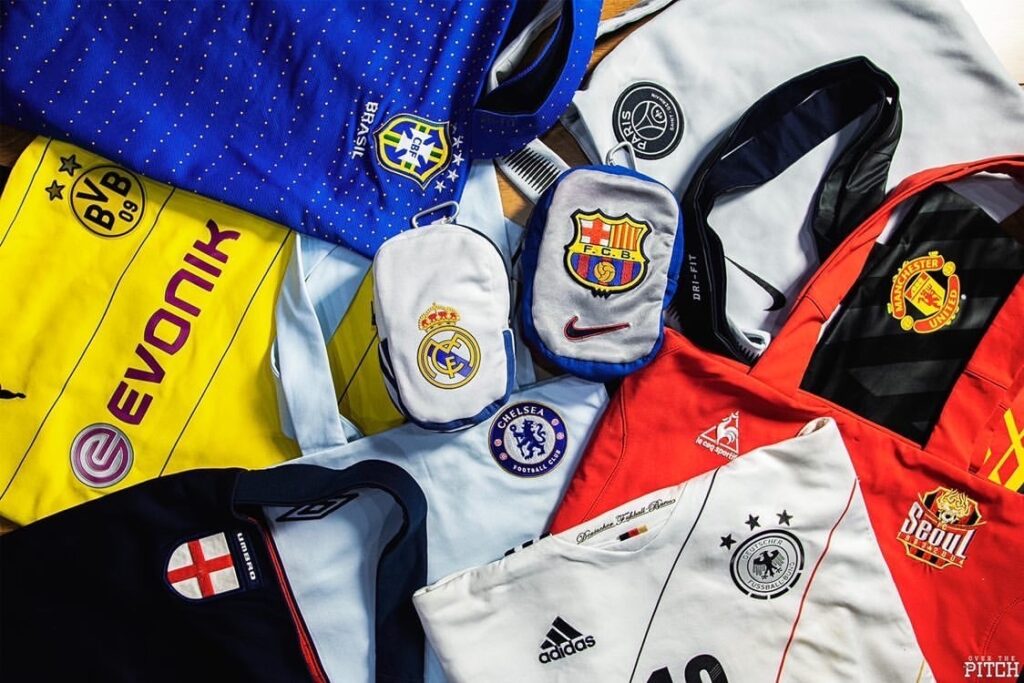
Kevin Chan: Yeah, Unwanted FC is born out of a love for all things football, fashion and sustainability. As the name suggests, we give unwanted sporting garments a new lease on life through functional products. So we hand make new functional creations like tote bags, caps and bucket hats and so on.
[Voiceover]: So you take unwanted football gear as in supporter gear?
Kevin Chan: Yeah, almost anything. Mainly football kits is what gave birth to the brand. But you know, we've worked on shorts, socks, jackets.
[Voiceover]: Is it true you won't take Liverpool gear because you just burn that, like there's no point recycling that?
Kevin Chan: Yeah, you know, I'm a United Supporter. So I'm a bit salty. You're not wrong there.
[Voiceover]: Love it. And how'd the idea come about, Keith?
Keith Chan: So, long story. We were actually interns at Adidas backtracking six and a half years ago, and that was our dream, to always work at a global sports brand. Growing up, all we did was kick a ball. We wanted to make it pro, but wasn't good enough, but wanted to stick with the game. Kevin was interning making football as I was interning making football shoes. And then in the background, we did see a lot of waste at a global sports brand and not pointing fingers at our previous employers. I think it's a traditional way of working for a lot of brands to have a lot of samples, a lot of product that don't make it on the market that they just destroy. So that left a very sour taste in our mouths. Of course, coming back to Australia, I think late 2018, we then decided to take a football kit and make it into a tote bag. First was just experimental and then we actually looked at each other and said, wow, this is quite a functional product.
[Voiceover]: So was that one of your jerseys, one of your kits?
Keith Chan: Our little cousins.
[Voiceover]: Do you remember what team it was?
Keith Chan: It's a funny one because it was a team in Hong Kong that self relegated themselves through, like, financial crisis and not enough investment. So that really stuck to the name Unwanted. This jersey is Unwanted. The team's called Sun Hay, so they're still playing in Hong Kong, but in like the third or fourth division. So, yeah, that was a very fitting jersey to upcycle as our first product.
[Voiceover]: Awesome. And did you say it went into a bum bag? Is that right?
Keith Chan: A tote bag.
Speaker E: A tote bag.
[Voiceover]: Why tote bag? Just because it was an easy starting point.
Keith Chan: Think it was the most functional product as well. Most simple one to get into. And then as we evolved, we got more complex with our designs.
Kevin Chan: It was an easy pattern. Yeah, yeah.
[Voiceover]: And tell us about some of the designs that you transform football kits into now.
Kevin Chan: There's so many product lines. Honestly, upcycling is really limitless. Some of our best sellers include the boot bag. Very functional for actual soccer players. We have a smaller version like a toiletry bag. Great for travel. A lot of fashion forward pieces like your bum bags and your side bags as well. The list goes on. Keith. We've got some new products dropping soon. Right. Any that I've missed? Yeah.
Keith Chan: So thanks to Ultra Football, one of the biggest retailers in Australia, they gave us some footwear samples to play around with. So we've been making wallets from football shoes, keychains and trying to experiment through because we've always done football jerseys. Now really pushing ourselves to do footwear as well and making cool wallets and other pieces.
[Voiceover]: That's awesome. I saw the wallets on there, I was like, oh, that's such a good idea. And the footy shoe bags, I could imagine football players would just love them. Like they're just so unique and personal.
Kevin Chan: Yeah, for sure.
[Voiceover]: And so from a customer's perspective, can you talk us through how it actually works? So do I send in my kit and then that kit gets turned into something for me or can you take it on any kits and then customers get random kits made into something.
Kevin Chan: So there's two avenues that customers can support us through. Hosted on Shopify, obviously our website, you can shop ready made collections. We love picking out old jerseys from all over the world from op shops, from Facebook Marketplace and recreating them into one of our products. But customers also have the option to send in an old kit and just use our service. So they'll have their old kit ready to be upcycled. All they have to do is jump onto our website, pick their design and send in that old kit.
[Voiceover]: That's cool. And what's the turnaround time for one
Kevin Chan: or two products within Australia? Only takes two to three weeks. So pretty quick.
[Voiceover]: And where are you manufacturing out of?
Kevin Chan: We've got tailors in Brisbane and Melbourne helping us, but for any orders that's very sizable, over 50, 60, 70 units. We have a partner factory in Malaysia who's really quick and we work really closely with them now as we look to scale.
[Voiceover]: That's cool. And I think a lot of people would look at this business and upcycling in general and think, gee, that looks like a hard business to scale. I know that's front of mind for you guys. What's going to be your approach to scaling this model?
Kevin Chan: Yeah, such a good question, Bushi. We learned it the hard way, you know, after sampling and doing it for so many years. Obviously it started off as a passion project, so business wasn't the end goal, but as it grows, we want it to be a very strong business model. We want to prove and challenge the fast fashion world. And we found that having really good tailors and fashion designers in our team here in Australia, they set up a pattern and we're able to scale it through our partner factory in Malaysia having more so seamstress and more doers following our ways of working. So I feel like we're Getting into routine now and. And the next step is just winning over those really good partners and big brands to show the world what upcycling is all about.
[Voiceover]: Well, speaking of big brands and big partners, I got trapped into your Instagram page seeing some of the football footballers and the partnerships that you've already got. What was one partnership that was really exciting for you, that you were like, oh, we're onto it now.
Keith Chan: I think it's hard to hand pick one, but staying locally. There was a really big star that recently came to Australia, Juan Mata for Western Sydney Wanderers and his proactivity of volunteering to be the face of the great save campaign that happened with the PFA last month to really educate the Australian consumers on saving kits and what you can do with your old jerseys. And we actually had the chance to upcycle old Manchester United jersey for him into a wash bag. And such a gentleman. When we delivered to him, he gave us his experience playing at the top level in the English Premier League, the amount of jerseys he got, the amount of shoes he got and all the other accessories that he was being given on a weekly basis. And yeah, hopefully we can work with him in the coming future as well.
[Voiceover]: He's a legend.
Kevin Chan: Yeah, absolutely. The World cup winner.
[Voiceover]: Yeah. Wow. That's not a bad starting point, is it?
Kevin Chan: Not at all.
[Voiceover]: Overall though, how are you immersing yourself into the football community from a marketing perspective? How are you spreading the word?
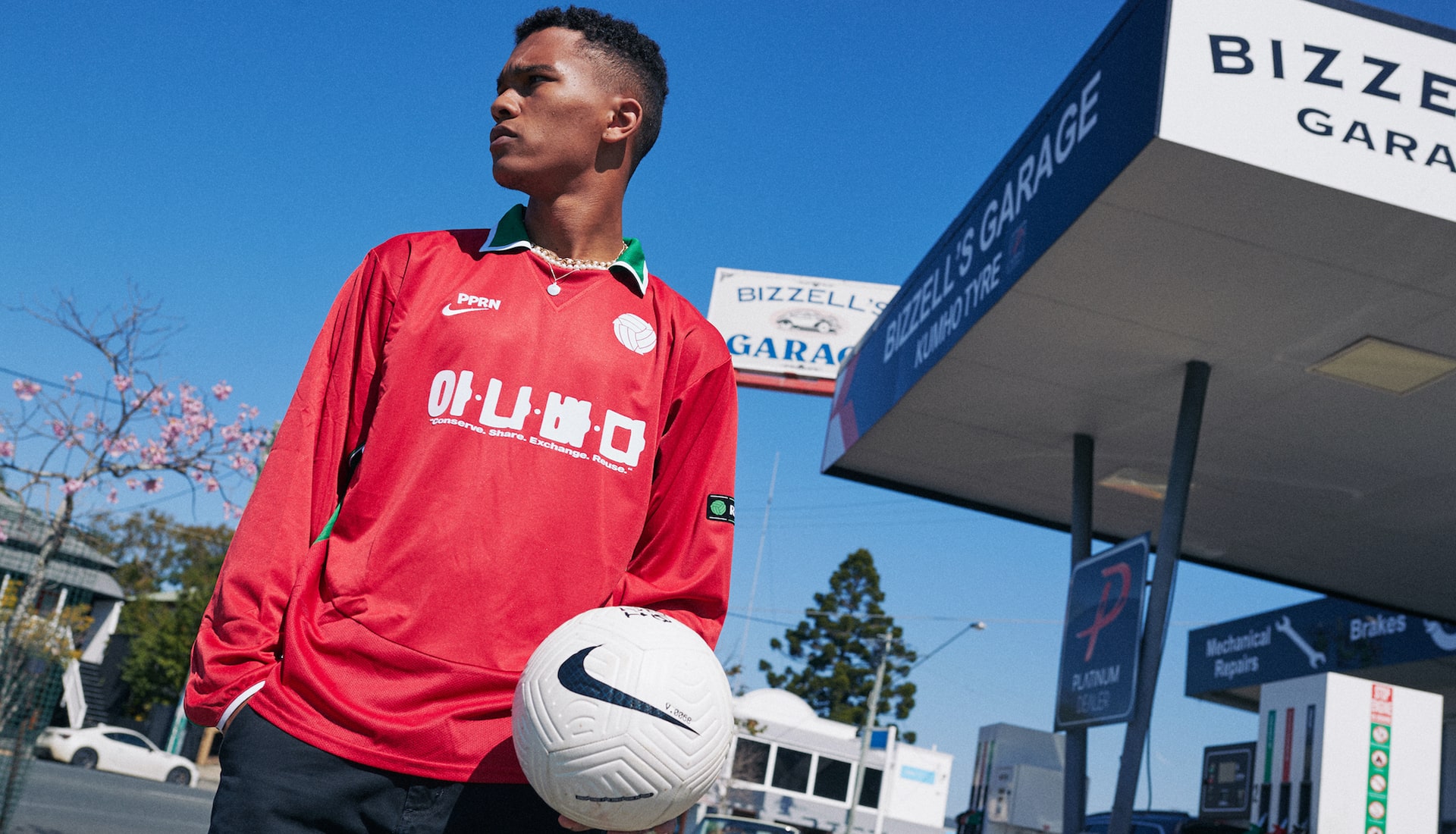
Kevin Chan: It's all very organic, bushy. We're so lucky that professional players resonate with the idea of giving unwanted football kits a second life. So many players get given so much new gear, probably on a game to game or season to season basis and they want to relive those memories and, but don't know how. And when they find out about us, they're always sending in their old kit, getting boot bags made. And for us it becomes very good user generated content. We don't have the budgets to pay these big athletes to use our product to get photos of them. But very naturally these Matilda players, these English Premier League players would rock up to game day carrying our product. And the amount of photos that end up on our social media platforms is all organic. And in return we're building some sort of, you know, a community. People aspire to be those Premier League stars so people would buy in and follow our project.
[Voiceover]: That's cool. Now you mentioned Shopify earlier. Tell us the channels that you're selling through. Obviously online. I did see a reference to Etsy. I'm not sure if that Was an early days reference or are you still on there? Are there any other channels other than directly online?
Kevin Chan: Shopify has been a game changer for us. We host most of our sales through Shopify. Not too many channels right now. Our very first collection was dropped on Shop on Etsy. Sorry. Before we found out how to use Shopify, it was so funny. Like our first collection, 20 tote bags. Keith and I were just staring at the screen waiting for the first sale and after I think 15 or 20 minutes we got an order from the US and that adrenaline rush, you know, that dopamine that came through was just felt like we scored a match winner. So yeah, shout out to Etsy. We're not on there currently. But you recently had a guest on I think Nate from. Is it Storefront?
[Voiceover]: Yeah, Storefront, yeah.
Kevin Chan: Really keen. I've signed up for the waiting list. Really keen to give that a go and you know, just amplify beyond Shopify and why not list on ebay, depop and Etsy again.
[Voiceover]: Yeah, it makes a lot of sense. Those creator, creator channels are right for you, obviously. What about for from a Shopify perspective because you have that dual model there where you can, you know, have your own kits turned into something or you can buy off the shelf. Has there been anything special or unique that you've had to do from a tools or tech perspective to facilitate those models?
Kevin Chan: Every now and then we need to call in the help of a dev. Luckily, Shopify doesn't really require that. A lot of things are out of the box. Makes it look like I know what I'm doing. But here and there we want to create a better ux. Like how do we showcase testimonials better across the buy flow? So every now and then we'll call in a dev to help us. But luckily we also have some great plugin tools for search and merchandising. But yeah, Shopify is so great. There's always an answer.
[Voiceover]: Yeah, nice. And from a product photography perspective, because I could imagine that every product is unique. Right. So everything is slightly different. How do you manage that and handle customer expectations around what they see versus what they get?
Kevin Chan: Yeah, it's important not to catfish our customers, but luckily I think we do a pretty good job being transparent with what the product is, where it came from. I think we have a pretty good studio setup, try to take important angles of the product. It just, it always is difficult because customers can't touch and feel our upcycled product online and in our in person events, people are always more amazed at the product. When they handle it, they. They find out that there's a bit of weight and durability to it and appreciate the craftsmanship a bit more. But I think we just got to continue doing what we can from a digital perspective because that's where the traffic is.
[Voiceover]: Do you get many return orders?
Kevin Chan: Not really. In recent times. I can't recall when the last time we had a proper refund, we had to action. We actually offer free lifetime repairs. Bushy. It's worked in our favor. It's a nice conversion tool. You know, you buy an upcycled product, if it breaks, you can always send it back and we'll repair it for you. But this model has given us ongoing feedback as well. If we see that a product is broken and come back through our doors, it's feedback for us. For example, we had a consistent trend a few years ago where zippers kept breaking, so we invested in more heavy duty zippers and. And we've seen the return rate dramatically drop.
[Voiceover]: Yeah, brilliant. Keith, what's most important to you? Is it that you get deep into the football community or that you're setting up a model for a scalable upcycling model where you could potentially extend out beyond football?
Keith Chan: I think football is always going to be at the core of two brothers that grew up kicking the ball. But then our goal is to educate at school scale. So we're already looking like. Some athletes from AFL recently sent in kits for. For it to be made into bags. So we definitely want to scale beyond football because upcycling can be plugged into fashion, can be plugged across codes. So I think that's really the. The next steps for us to go beyond just football.
[Voiceover]: So it could be any sport where 100.
Kevin Chan: Yeah, yeah.
[Voiceover]: And have any of your employers, previous employers or teammates reached out to you since, like that what you're in the industry with? That's where the idea came from. You're inspired by seeing what happens in the industry and you've gone out and created unwanted FC in response to that. Have any of them reached out to comment or talk through what you're doing?
Keith Chan: I've had a lot of colleagues at Adidas actually either send in their own kits to be made into a laptop sleeve or tote bag for them to take to work or even make, as you said, the shoe bag for them to carry to play football at lunchtimes. So, yeah, it's rewarding to see people in the industry acknowledge our work and hopefully we get projects as well with these bigger brands.
[Voiceover]: Coming up, what do the projects look like?
Kevin Chan: Kevin?
Keith Chan: I think you can share how the project with Nike at Women's World cup look like.
Kevin Chan: Yeah, that was the dream project. Yeah, Using Nike as as the benchmark here. As you do just drop it in.
[Voiceover]: Just. What are the projects? Oh, we're just doing one with Nike. No biggie.
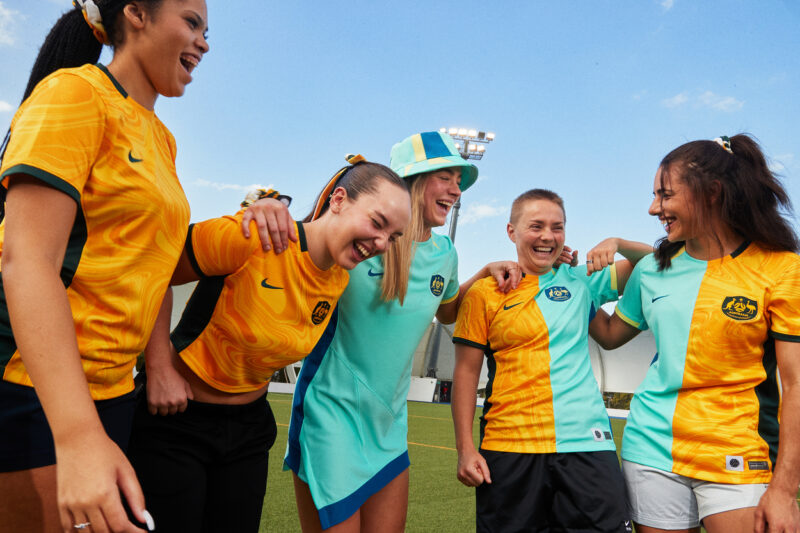
Kevin Chan: Yeah, it was. We were very lucky. We had the Women's World cup here in Australia in 2023 and I guess they were looking for a very authentic brand to tap into the Aussie market with. And we went exclusive with them for maybe four or five months, you know, before the World cup, during the World cup and post World cup and we ran some ongoing workshops out of one of their flagship stores in Sydney. So two or three workshops, Nike app members can come in, learn about the brand, ask me questions, and we were personalizing some ready made tote bags there. So really great experience, great exposure for us. We took over, you know, Nike's homepage, Nike's app. Wow. Yeah, yeah. Did some ongoing social media posts from our end as well, just to kind of tell that story, try to inspire the next generation of women's football. So that was a dream project. We wish we had a Women's World cup every year.
[Voiceover]: That's amazing how like for a brand like Nike to say we love what you're doing and we trust you guys enough to put you on our homepage and in our stores, that's a big deal, really.
Kevin Chan: Was.
[Voiceover]: Do you remember the conversation where you were like, actually this is going to happen?
Kevin Chan: Oh yeah. A lot of back and forth. And when we first got approached, the email ended up in my spam folder. So I could have completely missed this opportunity, but it was a real pinch ourselves moment. But I think it was fully deserved and it is where the market's heading. Big brands want those authentic stories and it's not easy for them to replicate. They could easily hire a tailor and upcycle internally. But it's not the same when you know you've got a brand who lives and breathes upcycling in circularity.
Speaker E: Decuber's mission is to leave the world more amazing than we found it. So what does that look like? It means prioritizing sustainable practices, empowering amazing people and sending less rubbish emails. With the help of Klaviyo, Daqua have been able to do exactly that and achieve 34% growth in revenue from Klaviyo Flows. With Klaviyo, Dikuba has been able to confidently send more emails, knowing that they will be valuable by responding to omnichannel behaviors and targeting at risk and high intent shoppers differently and growing lookalike audiences. See the world doesn't need less email, just needs amazing email. To explore how Klaviyo can grow your e commerce business and to see more case studies like this, visit klaviyo.com au
[Voiceover]: when it comes to upcycling, talk us through some of your lessons that you've learned in how to do it obviously in a scalable way that doesn't send you broke, but also to do it in an authentic way where you're actually making a difference. And then it's not just greenwashing or putting a label on it.
Kevin Chan: 100%. Keith, I think you'd agree that we have some really strong guardrails based on our values and morals because everything we produce, we want it to be functional. We don't want to cut up a beautiful football kit just for the sake of it. And it's got to make sense. Beyond functionality, it's got to make sense. If the original football kit held value, why not just resell it as a kit itself and not just, yeah, as you say greenwashing and doing upcycling for the sake of it. Yeah.
Keith Chan: One good example is sometimes customers would ask us if their design would make sense. Let's say they want to propose to send in a brand new jersey, but we would actually tell them what's wrong with the jersey. Why can't you wear it? If you have any old kids jerseys that you no longer fit, maybe that's better fit for an upcycled product. So yeah, as Kevin said, it has to make sense. We don't want to upcycle for the sake of cycling.
[Voiceover]: You're like, just keep wearing that jersey. Don't get the new seasons jersey. Keep the old one.
Kevin Chan: Got a good example. Too bushy. There was one time this customer, I think she was like a middle aged mom digging through her son's or kids wardrobe and there was this vintage Arsenal sweater from like the 90s. And she sent a photo. It was like, hey, what do you boys think? Like should we turn it into a boot bag or a tote bag? And. And I actually offered, I was like, hey, this is worth a fair bit of money. I really, it's in my size. Can I buy it off you? And I ended up purchasing a vintage Arsenal sweater from the 90s off the prospect. So one sale loss but a vintage Arsenal sweater gained.
[Voiceover]: You actually paid money for the sale that you could have got.
Kevin Chan: Yeah, 100%.
Keith Chan: Yeah.
[Voiceover]: But there is that, isn't there? There's two avenues here is like there is a whole vintage resale market for football jerseys especially. Probably not so much boots, but definitely for jerseys. And so people now have two options is like to either resell it and pass it on or to actually turn it into something that they can use every day and keep it.
Kevin Chan: Yeah, you're right. It's a great trend. And so many options now for the consumer.
[Voiceover]: Is there any complexities around sponsor logos or anything like that? I can imagine that some of the jerseys that you're turning things into have dominant sponsors in them. And as you're creating apparel or accessories around the placement of sponsor logos and things like that. So it doesn't look like it's a Nike bag or trying to look like a Nike bag. It was just that Nike might have been on the jersey.
Kevin Chan: Yeah, yeah. We tried to pay homage back to the original kit design. We want people to look at it and kind of notice that, oh, this used to be a football kit. We do have personal preferences. Like sometimes out of values and morals will keep sponsors off it. Like, you know, if it's a betting sponsor, not the best look. So things like that. We have our little preferences and a lot of customers will add in design notes as well.
[Voiceover]: Have you had any weird requests?
Kevin Chan: We do get a few, don't we? Just sometimes people would send in multiple kits at once and want to turn, you know, three old garments into. Into one product. That leaves us with a whole bunch of leftover material. But personal preference, they want a crazy looking boot bag and we just always try to follow up and say with the offcuts, do you want to create something else? And most of the time they will.
Keith Chan: So it's an educational process in saying that as well. We learn a lot from these requests as well. Like for example, beIN Sports last year was saying, make a beanbag with these LaLiga jerseys and we'll actually have someone sit on it and watch La Liga on it. So yeah, that actually pushed us to be so strategic about how we form the pattern and how we actually execute the design.
[Voiceover]: And are you coming up with the patterns yourself, Keith, and the designs?
Keith Chan: No, not ourselves. We do have a bunch of ideas. But it's also up to our tailors as well. They're really talented, coming to us with ideas. So it's quite open. Kevin might have an idea, I might have another idea. But end of the day our tailors would actually set up the pattern and tell us if it's feasible or not.
[Voiceover]: You can imagine football clubs like I was just thinking about my son's football team and every year they obviously go through a Jersey because they're 10 years old. They're growing quickly. So they grow out of those, even their, their local jerseys very quickly. Even something around end of season gifts, turning jerseys into things that they can keep forever. That's a pretty cool idea in itself.
Kevin Chan: Yeah, it's a great avenue and it's something we're trying to do more of, you know, getting that repeat. Oh, it's time for our end of season now. You know, what are we doing with old merchandise? We want Unwanted FC to be that household name.
[Voiceover]: Yeah. And what are you finding your best marketing channel? I know we talked about partnerships and collaborations there, whether that be with Nike and Matilda's or other clubs. From getting the word out there, are you still going very organically or are you putting paid behind it?
Kevin Chan: It is very organic. Bushy. Where we take a lot of pride in our content, we find strategic ways to get media outlets to surface our story as well as, you know, collaboration post is really big now on social media, so making sure we create beautiful content for our partners and athletes and making it very shareable as well.
[Voiceover]: What's the secret to a good collaboration post?
Kevin Chan: If I told you we might be out of business. No, no, I'm joking. Keith, what do you reckon? Like, why do you think we have such a good success rate with that?
Keith Chan: Yeah, it's a lot of trust. I think the partners we work with have a lot of trust with us and building that network and a lot of this, these partner posts, people just think it happens overnight. We actually take a little bit more time to go through the efforts, plan with our partners what type of content we want to put out and put a story behind it, not just put up a photo and invite five collaborators. So I think putting that extra effort and we're very proactive about it as well, coming from a marketing background. So, yeah, going that extra mile to actually make a good post. I think there's. So Kevin was saying we have a secret behind it, but that's basically to plan it out. Yeah.
[Voiceover]: When you say partners for collaboration posts, are you talking influencers? Are you talking clubs? Are you talking brands?
Keith Chan: I think for us it'd be more clubs, athletes and also organizations like Professional Footballers Australia, the Not for Profit, big household names.
[Voiceover]: Yeah. Cool. And then I'm really interested. I was speaking to Harry at Studio Hawk at Retail Fest and talking about his new brand of luggage and how much success because obviously they've got a great SEO background and he said, actually we're having a lot of success with digital pr, so. And it reminded me of what you were saying there around getting coverage by having interesting stories. What's your favorite example that you've done around getting that digital pr?
Kevin Chan: Yeah, yeah, great question, Bushy. Love a good backlink as well, by the way, just for the SEO listeners.
[Voiceover]: Backlinks are still relevant.
Kevin Chan: Absolutely. I love a good backlink. We recently did a pop up for a week in Hong Kong and we got a great coverage piece in Chinese. I had to get a translator to read it to me, but still one of my favorite pieces because it was so organic. It's one of their main digital news outlets and they just saw us and we're like, these guys look Chinese but they're not. They're from Australia, but culturally they were born in Hong Kong and they're coming back, you know, to pay respect to our culture and did a whole life story on us. You know, I didn't have to pay for that. I didn't even ask for them to do it. They wrote a great cover story on us. And overnight Keith was like, where are all these like random followers coming from? What happened in Hong Kong? And we did a bit of digging and one of my mates was like, oh, you're featured in the local news. So that was one of my favorites recently. And you know, there's in SEO, people always try to replicate these success stories through backlinks, but it's hard, isn't it, backlinks? It's. You have to be very authentic. You have to work with your brand story and your product and yeah, meet. Meet the right people at the right time, I guess.
[Voiceover]: And have you had that scenario where you've got a great piece of digital PR and beautiful story hits the mark, but they don't actually do the follow link. Oh yeah, you had to go back and ask for it.
Kevin Chan: Yeah, I always ask for the link.
Keith Chan: Yeah.
Kevin Chan: No, I just have to explain, you know, I think sometimes people publishing it aren't SEO savvy maybe.
[Voiceover]: Yeah.
Kevin Chan: But I think it's a better user experience too. Right. People who do want to find out more about the brands mentioned, click the link, open a new tab. I think it's a great, great ux.
[Voiceover]: Yeah, makes a lot of sense. So tell me, you both got marketing, fashion backgrounds. Kevin, I understand that you've recently gone full time on Unwanted fc. Tell us the decision there where Keith, you're still working your guts out in a job, you know, doing the hard Yards. We've just got Kevin living startup life. How did you guys come to that agreement?
Kevin Chan: It's a long term goal of both of ours. We've always wanted Unwanted FC to scale and, and be at a point where we can call it our day job. Obviously a lot of hard work goes into it, but for me, I suddenly had this gut feeling. I think we've always trusted instinct and I was like, crap, I'm reaching my late 20s, soon to be 30s. If I don't do it now, when will ever be the right time? It's never going to be the right time. So if I fail, at least I fail young. So, yeah, just trusted my gut here. And Keith is going to be transparent. I'm sure he wants to do that soon as well.
Keith Chan: Yeah, but unfortunately I'm paying rent in Sydney, so have to hold off a little bit first. But yeah, that's also a dream, to eventually run Unwanted FC full time. I think that's the North Star.
[Voiceover]: And does your employer know about this? It's not even a side hustle, right? Because I think that's a different thing, what you're running here. But does your employer know about your other mission?
Keith Chan: Yeah, I think it was part of the first interview and I was very transparent with them and they're very supportive as well. So that's the best thing about the employers here. They know it's our dream for many years now. So they're also very supportive in that sense.
Kevin Chan: Yeah. Yeah. Same with before I left my laugh employer Medibank. Working in the Martech team, I had to do a presentation on what Unwanted FC was to the entire team and everyone just loved it, saw it as a part of me and when it came to time for me to move on, everyone was so supportive and assured that it's going to be such a great journey and everyone's really backing us and rooting for us. So super grateful.
[Voiceover]: What have you noticed since going full time, Kevin? Have you noticed that you've had more success? Has it sped things up? Any major changes?
Kevin Chan: People around me think I'm a bit happier, less grumpy.
[Voiceover]: That's a nice start. Yeah.
Kevin Chan: I think honestly, mental health, it's so common now for everyone to talk about mental health. I feel more fulfilled in what I do every day and less pressure, less stress. Definitely not working two jobs anymore and putting all my efforts into something that is my passion and what brings me fulfillment. Yeah, instant gratitude there.
[Voiceover]: Love it. Do you reckon he's happier?
Keith Chan: Keith, it's only been a week and a half. So he's been sending me more memes, so I think he's getting there.
[Voiceover]: More time for every meme. Just tell him to get back to work while you're slogging your guts out.
Keith Chan: Yeah.
[Voiceover]: So, as twins, do you work well together? Do you reckon being twins helps as business partners?
Keith Chan: I would say yes, to an extent. I think the fact that we think almost the same is great, but then we also have different skill sets to add to our toolbox. So the fact that we're very aligned, but we can also challenge each other on different ideas, I think that's a very good balance.
Kevin Chan: Yeah. Yeah. Keep coming from more of a product background. Myself coming more from a commercial or digital marketing background. It's a nice little yin and yang philosophy there. Yeah.
[Voiceover]: Do you have a formal split in responsibilities or do you leave it pretty fluid?
Kevin Chan: No, it's pretty fluid. I think there's a lot of crossover in everything. Big, big believers in getting more eyes on each piece. You know, quality checking. Never want to become a business that has one person with all the knowledge. In some workplaces, there's always that one guy with all the knowledge in his brain and doesn't like to share it. I would hate for our business to become that.
Keith Chan: A good example is Kevin obviously built our Shopify website during COVID and I was very impressed by that. And I really want to learn more about this website platform as well. So over the few years that led up to today, I'm sometimes on the Shopify app, changing the banners, making different widgets, and Kevin would wake up and be like, why'd you do this? But it's a lot of fun and I think on one of your previous episodes as well, and Kira said, you don't need to be a web developer to manage a Shopify site now. So that's a great example. I've always been more of the offline marketing or product role, but I've been able to transform into tapping into the Shopify site. Traditionally what Kevin would be doing.
[Voiceover]: Yeah. And just screwing things up. But it is true. And it's only going to get easier. Right. So last week we had James Johnson on talking about Horizons, which is Shopify's new release, and being able to vibe code, essentially being able to type in plain English word you want blocks or themes to look like and to do is going to change the game. I'm interested because you both seem very digitally switched on and into new ways of working. Are there any collaboration or productivity tools that you use to keep everything organized? Because I like that point that you made around we don't want one central source of all knowledge. How have you set yourself up from that perspective so that you can both have a good view over the business, that it's easy for you to collaborate, especially while you might be working in different times, you're working in different places. How's that set up?
Kevin Chan: We recently jumped onto Monday.com used it at a previous workplace and it's great. A lot of cool little automations moving from board to board. When you click things as mark things as done or work in progress. We're really enjoying it. I think it's, it's great to have a little centralized board like that because previously it was a lot of back and forth on on Facebook messenger, to be honest. Completely honest.
Speaker E: Putting your best foot forward doesn't just apply to shoes. It's also the key to growing a successful business. And for bad footwear, that meant upgrading to Shopify plus and implementing POS into their retail stores to deliver seamless customer experiences that could be managed by from one unified platform. The team at Bared Footwear now have the tools and the confidence to scale globally thanks to time saved on operations and functionality designed to streamline the purchasing process for customers. To read more success stories, visit shopify.com casestudies and speed up your growth gains.
[Voiceover]: What about you Keith? Any tools that you love from a productivity or collaboration perspective?
Keith Chan: I definitely think AIs think the future of all of our platforms but in the past we used Google Sheets a lot and Google Slides and now having these productivity tools like Canva with AI built in most our website banners, our creatives are made from Canva. So again, I'm not a designer, but I can make great creatives from that standpoint. I think Canva is one of my favorite tools.
[Voiceover]: Awesome. If you had advice for anyone who's looking to start a business with a family member, what would it be? Keith, I might start with you.
Keith Chan: There's definitely going to be highs and lows. Definitely not just going to be celebrations on a sale or getting an award. There'll definitely be dark times. For example, you spoke before multiple refunds or even business challenges on a daily. So be prepared for both the good and the bad times. But definitely rewarding.
[Voiceover]: Yeah.
Kevin Chan: Nice.
[Voiceover]: Kevin.
Kevin Chan: Yeah, what Keith said.
[Voiceover]: Totally agree, but spoken like a true identical twin.
Kevin Chan: Yeah, but who better to do it with, right? Like a family member that you can trust who's not going to turn their back on you. It is rewarding. So pros and cons, think it through.
[Voiceover]: What do your Parents think.
Kevin Chan: Unfortunately, both my parents have passed away. Bushy. Yeah. I don't know if this is the part we keep or not, but. Yeah, that's fine.
[Voiceover]: Sorry to hear you guys.
Kevin Chan: No, that's fine. Yeah, we started the business just as Mum passed from cancer. Yeah. So we wish she was here to see it. I think she. She wouldn't really show it. She wouldn't show how proud she is. I think deep down she would be. But, yeah, it was a weird phase in our life. We had to hold off launching the brand because we were looking after Mum for a while.
[Voiceover]: So I'm sure she'd be super proud. Super proud. She'd love seeing you guys work together. Right.
Keith Chan: She's always saying it's not enough, though. Just like us growing up. We did everything together. Play football together, school together. We even did the same uni degree. And my mum's always pushing us to do better. Why can't you get A's instead of B's? But I know deep down, deep down she was always proud. Even if we. We got a C in, in maths, she'd be.
Kevin Chan: Be proud of us.
[Voiceover]: Oh, you're doing incredible things. She would be super proud, I reckon. Tell us more around what's going to excite you over the coming years about the world of sustainable and upcycled fashion. Where do you want to see it head?
Kevin Chan: Just.
Keith Chan: I love, I love that the.
Kevin Chan: The trend is continuing. Like, you've had so many great guests speak about it on your podcast, but the trajectory is. Is really great. It's very affirming to what we do and we love to see big brands tap into it authentically. Not just greenwashing, but actually adopting and making circularity a part of their business model. You know, I think a good example is, I think they used to be called Renta and now called Revive. We're seeing more and more Aussie brands reselling refunded or faulty stock through that platform. And that's just the start. I think that's gonna be a real game changer.
[Voiceover]: Yeah. Awesome. And I feel like in Australia, tell me if you feel the same way. We're a few years behind the US especially Thredup, and people like that who have been able to keep moving forward where I feel we got hit probably a little bit more by the cost of living pressures where, where people might have had good intentions, they were more kind of had to come back and focus more on wallets and cost for a little while.
Kevin Chan: Yeah, you're right, bushy, because sometimes circular solutions ain't the cheapest. Yeah. I think we always look at the US and Europe and they seem a little bit more progressive in this field and we take a lot of learnings from that, but consumers end up moving that direction as well. So in a way we use it as an advantage and try to be ahead of the game.
[Voiceover]: I mean, it's perfect for you though, isn't it? I mean, football kits in Europe, like that's a perfect fit.
Kevin Chan: Yeah.
[Voiceover]: Any plans or expansions into that territory yet?
Kevin Chan: Yeah, I think Keith and I always wanted to put a flag up in Europe, North America and Asia, but one market at a time. Yeah. Current focus is obviously we did some work in Hong Kong recently, so we're planning to go back and do more work there. Beyond that, Keith's having meetings with some people in North America as well.
Keith Chan: Yeah, Obviously very big tournament next year, World cup, biggest sporting event. And we really want to actually educate at scale at the most watched sporting event in the world. Right. So had some talks with FIFA already some sustainability members in both Mexico and Canada. So hopefully we can place our brand at some of the fan zones in the World cup next year.
[Voiceover]: That would be phenomenal.
Keith Chan: So very early days, but a lot to plan out.
[Voiceover]: And will you go over regardless, do you think?
Kevin Chan: Oh, maybe we'd like to.
Keith Chan: I definitely want to go to Mexico. Yeah. Probably not the US but at this stage we. We were thinking how good would it be at Mexico with our products having unwanted FC at the World Cup? So, yeah, fingers crossed.
[Voiceover]: So good. It's a work trip. You got to do it.
Kevin Chan: Yeah, yeah.
[Voiceover]: Gents, just amazing story. I love your business in terms of how unique it is, but I love that it's underpinned by a huge mission and a real desire to make change in how fashion is consumed and given more life. So well done there. Tell us about the next 12 months. You mentioned World cup, you mentioned going back over to Hong Kong. What else is exciting for you that's on the radar?
Keith Chan: I think there's always things coming up. That's why I paused. There's nothing we can really, really point out that this is coming next month because the fact that players are always, always going to contact us and create a new product, I think that's the best thing that excites us. Every day. We might have another player come to us, a big name that wants to create a new product and that's where we can really again celebrate it and say this was major milestone.
Kevin Chan: Yeah.
Keith Chan: I think what's coming up, it's business as usual. And Kevin's going to elevate the brand further now, going full time. So yeah, I think there's a lot to look forward to.
[Voiceover]: I mean there's a few legends that might be soon to retire. You know, a bit of Ronaldo, a bit of Messi. Like there's a few jerseys floating around
Kevin Chan: there I reckon would be nice.
[Voiceover]: What about you, Kevin? Focus for the next 12 months.
Kevin Chan: Yeah, obviously going full time on the brand finally, strategically speaking, just doing more networking and meeting the right people to jump on board and get involved. We've had some great meetings with some new sales reps that want to help us and have the experience to help us. So, so exciting. And we're already having talks with some great potential clients and ongoing partnerships. Not just one off collaborations, but really cementing ourselves in in some big companies in Australia and abroad.
[Voiceover]: So systemizing the partnership.
Kevin Chan: Yeah, 100%. So yeah, exciting times. Hopefully there'll be some good news in the coming months.
[Voiceover]: Awesome. So if people want to keep across that good news, what's the best way to follow your journey and potentially get in touch?
Kevin Chan: We're really active on Instagram. We're a social media driven brand as I said before. So Nwanted fc, you can check it out but if you want to get in touch with us directly, you could find us on LinkedIn, Kevin Chan and Keith Chan or send us an email. Infouantedfc.com awesome.
[Voiceover]: Kevin, Keith, thank you so much for joining us on Add to car. I love your story, been absolutely fascinating. Thank you for taking the time to share with us.
Keith Chan: Thank you Bushy. Absolute pleasure.
Kevin Chan: Thank you.
[Voiceover]: How good are those two?
Nathan Bush: I had to hold myself back from nerding out too much on foot football talk. I really wanted the behind the scenes goss on the players that they've met and the teams that they've worked with. But I promised them that we would talk about sustainability as much as we would talk about football and I think we got there. Their story is proof that you don't need a loud brand or a massive team to stand out. Just a really clear mission, solid execution, a unique idea and a willingness to back yourself. Here are three lessons that I reckon are worth taking into your own business, whether you run an upcycling business or not. Number one, repairs aren't just ethical, they can be strategic. Unwanted FC offer free lifetime repairs on every product. That's not just a trust builder, it's a smart feedback loop. When zippers started breaking, they didn't panic. They upgraded their zippers across the range in the long term, saving them money. If you've got a product people use regularly, things think about offering repairs. Even a basic fix guarantee shows that you stand by your work and gives you direct insight into where things can go wrong. Treat your collabs like campaigns, not shoutouts. When Unwanted FC partner with players or clubs, they plan it properly, messaging, visuals and even rollout. They make sure that they come up with the idea west the people they're partnering with. That's why their collab content hits harder than most influencer stuff. If you're working with brand partners, take the time to map out the story together. Don't just brief it in. Agree on what success looks like. Yes, it's more work, but it'll give you content that both sides are actually really proud of and want to shout about. And number three, Digital PR is SEO gold, but you've got to make the most of it. After a pop up in Hong Kong, the Unwanted FC team got covered by a major news outlet, but they didn't just smile and move on and think it was a great time. They checked for backlinks, tracked the spike and used the attention to grow. If you ever land media coverage, make it count. Ask for the link re share it with your own commentary and make it part of your brand story. One article like that can keep driving organic traffic for years now. If this episode sparks something for you, share it with a mate. Maybe someone who loves football or is sustainable at heart. We've got hundreds of e commerce professionals tuning in every week and the best way to keep that going is sharing it via word of mouth. And if you haven't already, come and join us in the add to cart community. We've got almost 300 people in there right now. Founders, marketing, tech leads, sharing tips, templates and building better businesses together. It's free and you can join us@addtocart.com a big thanks as always to Shopify and Klaviyo and of course to Kevin and Keith for showing us how much heart and hustle you can stitch into an e commerce brand. Catch you next time. Thanks again for listening. And until next time, keep those customers adding to cartoon.