Aaron Woolf: Every period in history, there's always been something that sparked a new wave of style which has then been followed by everybody. And then they've obviously got the early adopters and the late adopters and everybody kind of in between providing that extra engagement opportunity beyond simply viewing and reading. You can now shop. They absolutely crushed it. Absolutely crushed it. You know, they're now running a second campaign with five more colors and I just think it's wonderful stuff.
[Ad]: Welcome to Add to Cart, Australia's leading
Aaron Woolf: e commerce podcast that express delivers all you need to know in the fast moving world of online retail.
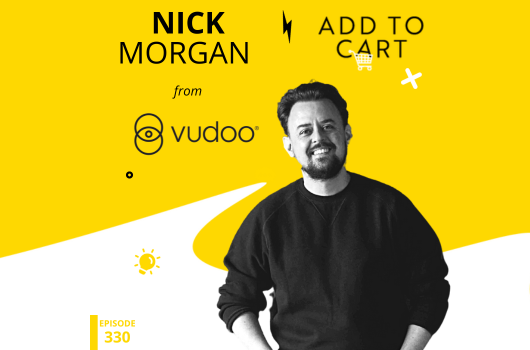
[Ad]: Here's your host, Bushi. Welcome to another episode of Add to Cart. I'm Bushie and I'm joining you from the land of the terrible people, otherwise known as Brisbane, Australia on Add to Cart. We welcome everyone to share and listen to e commerce stories. The more diverse, the better. I want to especially welcome the traditional owners and the original storytellers of the land that we are on, our indigenous and Torres Strait Islander listeners to join us in our e commerce conversations and our community. Imagine being able to see a piece of clothing or furniture on on your favorite TV show or your favorite news site and being able to buy it immediately or even what if it wasn't that version, but a cheaper lookalike version. I'm trying to think of an example of what I'm watching at the moment to give you an example of what I'm talking about. Okay, it looks like I'll be getting a white tea, a fry pan and some fake tattoos to turn into the Temu version of Kami from the bear. All right, today's guest is turning contextual advertising that's mixing editorial content with personalized recommendations into a reality. Today, I am thrilled to be chatting with Aaron Wolfe, the visionary founder behind Trendi. That's Trendy with two eyes at the end. Trendy is revolutionizing the way that we interact with content by seamlessly integrating shopping experiences directly into the media that we consume. With clients including Freedom, Maya, Temple and Webster, and integrated on networks including news.com, domain and Vogue Living, Trendy is connecting content with relevant advertising. In this episode, we will dive into how trendy reduces friction in the purchasing journey by embedding relevant products directly to inspirational content. Aaron will share the various ways that publishers and brands can leverage trendy's technology to drive engagement and sales, especially through that middle funnel. And we look into the future with some stargazing strategies on the future of contextual commerce, including potential integrations with stream services, social media, and who knows, maybe even VR worlds. So, thanks to our partners, Shopify plus and Deliver in person, here's our conversation with Aaron Wolf, founder and CEO of Trendi.
Nathan Bush: Aaron, welcome to ADD to Cart.
Aaron Woolf: Thanks for having me. Good to see you, Nathan.
Nathan Bush: Pleasure to have you here. We've been talking for some time, so it's great to have this finally happen. Now, for those following along at home, if you are researching Trendi, it's T R E N D double I. If you are googling along at home. Aaron, how do you describe Trendi to your barber?
Aaron Woolf: Yeah, it's a really interesting question because I actually had to describe it to my barber the other day and funnily enough, she's from Korea, so it made it even more interesting trying to explain it. But essentially what Trendi is all about doing is connecting the content that inspires you with products within the content instantly. Right? So you know, you're watching a TV show or you're reading an article or you know, you're getting inspiration for your home interior on Vogue Living or whatever it happens to be. That content's what drives the next step of your purchasing journey. And so what Trendy's done is reduce that friction and essentially put the products instantly into that content.
Nathan Bush: Okay. Did your barber understand that?
Aaron Woolf: She sort of got it. She sort of got it, I think. I hope she gave me a good haircut, so I can't really complain. Well, at least I think it's a good haircut.
Nathan Bush: No, no, that's a good haircut.
Aaron Woolf: Thanks, mate. Appreciate that.
Nathan Bush: The. It is a product that is, to be honest, much easier visually than it is through an audio medium such as this. But to break it down, what you showed me the other day I thought was really interesting. So if you are on Vogue Living, for example, and there's a new Runway or someone spotted on the sidewalks of New York, essentially what it will show is that image from the content. Editorial, which isn't manipulated, isn't put there. It's just what is always there from those publishers. And then you have ad spots below it. Is it always below it that feed up products that are similar to what would be recognized in that image? Is that correct?
Aaron Woolf: Yeah, I mean, it's the delivery of it varies platform to publisher to website to various different deployments that we have. But you're right, fundamentally it's all about editorial writing something that something is essentially designed to attract people and have people engage. And then of course, what Trendy's doing is providing that extra engagement opportunity beyond simply viewing and reading you can now shop. And so it's that extra, that extra step. But yeah, fundamentally, you know, a page on, you know, Vogue, let's say the street style section, lots of really cool content being created around all the different fashion weeks around the world. And it's, you know, it's really amazing to be part of that. So consumers are reading that, they're seeing the looks, they're seeing the looks of today now, even stuff that's coming that they perhaps didn't think was going to be in fashion. And of course, Trendy is finding the products from all the brands we partner with and then instantly connecting them directly to the, the images on the sites themselves. So, yeah, that's happening instantly and automatically and obviously people can go and check that out.
Nathan Bush: So there's a bit to unpack here because obviously it's a dual sided offering. But we might start with the publisher side. So tell us more around the types of environments that you might find trendy. Because in the examples that you showed me, the ad placements that we saw was clearly marked. It was powered by trendy. What are the kind of mediums that you will find a trendy recommendation in?
Aaron Woolf: So we partner with everything from lifestyle and entertainment all the way through to fashion and homeware specific content. So anywhere there's an image or a video which has been published that might have a level of inspiration fundamentally can be trendified or trendy or whatever you want to call it. Right. So we take all the images that are available when our tag is shown on any given publisher. But we work with everyone from97news.com you know, these aren't your traditional home and fashion publishers, but of course they publish a lot of lifestyle, celebrity and home content. And of course trend is available for them now when it perhaps, you know, a while ago, but yeah, generally speaking it's, you know, it works optimally on content that's built for fashion and built for home, but works incredibly well on lifestyle and entertainment content as well, specifically around big events. So we had a huge, you know, we had a huge day when it was the Met Gala. Like we were on Style nine and I think we had somewhere in the region of 6,000 clicks in a day, which is, you know, ridiculous. So, yeah, very proud of what we were able to achieve on that day.
Nathan Bush: That's very cool. And are the trendy recommendations, are they always served below or alongside content or within content or say for video, is it integrated in the video or is it shown alongside the video always?
Aaron Woolf: It depends on the publisher. It depends on the platform. I mean, look, Trendy's fundamentally finding products and matching products. How it's then deployed and surfaced on the publisher website or in the streaming platform is effectively just front end HTML, ui, UX design choices. Right. So we can do anything that the publisher chooses or the streaming platform chooses. But as a rule, it's essentially a Shop the Image button or a pause to shop button that sits within the video. So consumers can pause a video and buy what they see directly from the video within that frame. There's a Shop the image button that sits on images which again you click that button and then it shows you lots of products that are available within the image. And then there's the native shopping carousel that sits below images. And that one's really all about trying to drive maximum engagement and generate meaningful exposure. And of course brands pay a premium to be part of that, usually on a CPM or a very high cpc.
Nathan Bush: Okay, and are brands working with Trendy to buy those ad spots or are they working directly with the publishers to buy those ad spots?
Aaron Woolf: Well, a bit of both actually. We provide our technology to publishers for them to use for their own campaigns. So we recently did something with Domain and Snooze. So essentially Snooze are a client of Domain and Domain want to help Snooze drive more engagement and they want to provide a more engaging advertising experience whilst keeping it really contextually relevant. So they use Trendy's technology to turn a lot of images into Snooze powered shopping experiences. Right, so or Trendy powered shopping experiences for Snooze. So that's one way and of course brands, brands can be part of that through the publisher. And the other way is essentially Trendy is a, an ad network network of publishers that brands can, can advertise on. So it's not dissimilar to sort of Google Ad Manager in some ways in the sense that you can use Google Ad Manager to run your own campaigns, but you can also have access to all the advertisers through the Google Ad Network. So yeah, doing a similar thing for publishers, it's not quite at the scale of Google yet, but we hope we will one day.
Nathan Bush: I'm sure you will. It's a low target, don't worry about it. So from a product perspective, so key to this technology is being able to match products. How are you ingesting those product catalogs to at least learn what's available to be advertised?
Aaron Woolf: So obviously products come through from retailers in various different shapes and forms. So we've built our own way of ingesting product feeds which effectively automates it and just has it continually running for brands every 24 hours, just resetting, refreshing, updating, ongoing. Every brand has a product feed pretty much. I mean, we haven't come across many that don't. Product fee can be anything from a Google shopping feed to something they might use on Instagram or Facebook or just quite simply something plugged in through Shopify. It's all very straightforward. But when we import those products, it really does come down to identifying, using our AI, what the products are. Obviously, brands categorize in various different ways. So our AI is really all about categorizing products, saying, this is what it is, this is how it works, this is what it will match to, and then obviously creating those data points for those images which can then be matched to the images on the publisher websites and within the video content.
Nathan Bush: I could imagine that when you're dealing with high end fashion, especially around Fashion Week, there must be some stuff that the AI machine just gets boggled on to go, what the hell is that?
Aaron Woolf: Yeah, not really. I mean, we've been building trendy's AI now for a number of years and we're on version six, soon seven of fashion. So it's, you know, it's pretty sophisticated stuff and obviously it's able to, you know, continue learning and evolving as we continue to train at this rate and optimize and. But it seldom gets, I mean some, I mean, occasionally, you know, somebody wears a feather and it's a bit, okay, well what is this? But even then it's still going well, we think it's a jumper and these jumpers look like that feather. But of course we do get some funky stuff coming in for events like the Met Gala. But even that, people are watching that, reading that article, getting really, really involved and then seeing lots of similar dresses from brands like Chopo and Victoria and woods and the Iconic and others and going, oh, wow, like that. And it's the inspiration. Then it's not about, I want the exact dress, it's, oh, I like that dress. I didn't realize that that retailer sold that product. And I think that's where trendy really does offer something interesting for brands.
[Ad]: You know that nervous feeling you get when you place your checked in luggage on that airport baggage machine. You're kind of just hoping that your luggage arrives at your destination on time and in perfect condition. It's the same in E commerce. You place a lot of trust in your last mile partners to deliver the final crucial element of the Customer experience. Now imagine you are a premium product with over 100 years of customer experience expectations. That nervousness increases a lot. That's why Samsonite has chosen Deliver in Person for their reliable on time delivery to drive outstanding shopping experiences, enhance brand reputation and significantly improve key delivery metrics. I mean you can never be too careful when it comes to making sure luggage arrives on time and undamaged. Don't settle for less. Make your last mile experience the first thing that customers remember. Learn more about the incredible performance uplifts Samsonite has experienced since working with Deliver in person@deliverinperson.com cases.
Nathan Bush: Is it set at any price points to say you are showing the Met Gala for instance, Are you then trying to show just similar looking fashion or is it fashion? Does it kind of prioritize high end fashion or different types of fashion or is it mainly based on the look and the design?
Aaron Woolf: I mean, without going into too much of the IP around Trendy, there's effectively three ways that we optimize. So one is obviously does it match? The second is does it make us money? And then the third is is this what people are going to want to click on and buy? So we've obviously got hundreds of millions of data points which we've collected over the time Trendy's been in market with the advertising solution we have and all of that data tells us what's going to happen next. So we've the recommendation AI is very much about this is likely to get the best engagement and the best click going forwards. And of course that's something which, you know, really does add value to the user experience because end of the day it's if it matches, it's great. But if people aren't going to buy it because it costs $3,000, there's no point showing it. One of the interesting points I've had many conversations with investors around this is they'd be like, oh well that product doesn't match exactly. And I said yeah, but it's getting 10 times the engagement of the product that does. And they're like all right, well what do you want? Do you want products to match and no one buy anything or do you want products to get clicks and engagement and sales? So I mean it's not just similar to how say Google search works in the sense that when you go to Google search for something, it's not just using what you're looking for, it's using a lot of historical data and there's a lot of other things behind it that are, you know, saying well, this one is the one you want and that's the variable that we need to go with at this moment in time. And so, yeah, so really what we're trying to do is say, well we believe based on this article, at this time, on that device, in that location, with that type of content and that product that's matched and you know, da da, da da, and all the other variables we have, this is the one that's going to get the highest engagement. And so as a result of that we've seen, you know, clicks go up, conversions go up and everything else happening. So yeah, very exciting, very exciting products. And some respects I think it's, yeah, it's, I think it's going to be a really big part of the future of the business.
Nathan Bush: And obviously you are creating a history on certain products around clickability, where it works, where it doesn't work. Are you also creating a history on users across different channels or platforms?
Aaron Woolf: So trendy is very anti personal data. So we are, we get the value of first party data, we get the value of collecting consumer data and not and you know, knowing who your customers are and all these other things. But the reality is the open web has significant challenges around collecting data and in a fragmented way where all the publishers are different, you can't aggregate data the way you used to be able to and it's only going to get harder to do it. So aggregating who the consumers are and what they're doing isn't something that we have any intention of doing. Having said that, we obviously work with retailers and the retailers will install our pixel. So when a consumer engages with a site using a device id, that Device ID is essentially an identifier to a degree, but it's an identifier for the retailer and it's their first party data essentially. So we're kind of in a position where we're helping them understand what's happening with visitors to their site from our adverts, if that makes sense. So we're not aggregating the data across multiple different retailers. We're essentially saying this user on your site has been back to your site five or six times and they've bought 20 things and so on and so forth so that we can sort of calculate lifetime value.
Nathan Bush: So retailers will get a view on what kind of content that their visitors are more likely to engage with off site.
Aaron Woolf: 100%. Oh, 100%. It's fascinating to see actually, because when a retailer approaches you, they immediately go, oh, Vogue, gq, Elle Marie Claire, love, love, love, Love. And then you tell them@style.9 and 7 and news, and they're like, oh, they're exciting, but they're obviously not the flagship token fashion brands. And then they see the traffic coming through, they see the sales being generated and like, wow, that's actually. That's an incredibly premium audience. And, you know, a lot of what we get, you know, is, you know, content being created in a variety of different ways. So, yeah, it's always very interesting to share those things with clients.
Nathan Bush: And when you're setting up those campaigns for the first time, assuming that it's done through the trendy ad network, is your advice generally, just to go broad, go wide and see what comes in, or do you go targeted to start with?
Aaron Woolf: Yeah, I mean, just run across the network. I mean, all of our sites are premium content publishers, so there's no. This isn't a kind of blind, programmatic buy where you might be in environments where you're not necessarily brand safe. We could, of course, open up and we could go a lot broader with a lot more publishers that perhaps aren't quite fitting with exactly what it is we're trying to do. And there will be opportunities to open up and go into more verticals going forward, but I think for now, it's very much a case of when a brand goes live. It's, well, here are all the sites driving your traffic, here's what the Pixel data is telling you about where they've come from, what they're doing, how they're engaging, how do you feel about this? And then they're able to determine performance based on different sources, different traffic, different content types. And of course, based on our own recommendation, AI, we're able to optimize performance as well. So it's a bit of a blend of both and everyone's able to kind of work together on it.
Nathan Bush: Yeah. And any movement into, say, social media, or is it purely publisher at the moment?
Aaron Woolf: Yeah, I mean, we'd love to work social media. I mean, you know, we're not anti. We're not anti social media. I think the challenge we face is the very much sort of walled gardens and it's kind of a case of, well, prove it and then, you know, engage with it. We've not really pressed it too hard. It's not something that we feel we needed to, given the size of the open web and sort of how vast that is. Our big focus over the coming, you know, months and years will be tv. You know, there's a huge amount of opportunity to connect into living Rooms and TV shows and all sorts of other things that we're currently working on, some really exciting things in that space because we, I mean, look, I understand people are connected on their devices all the time. People are spending hours and hours and hours every single day. So I'm not, I'm not ignorant to that fact, but the reality is everybody still watches television and it's still the TV shows, the Bridgertons, you know, the Kardashians, you know, these shows are still driving a substantial consumer behavior. And ultimately it's. It's that that trendy will, will be able to help consumers, you know, with, with their shopping behavior.
Nathan Bush: I love that vision because I think there's been a few things that have come out that have tried to crack that entertainment shopping experience, but nothing's really cracked it yet. In your vision of the world, when we are in our lounge rooms watching our favorite shows, whether that be on catch up TV, broadcast TV, maybe even YouTube, what do you think the shopping experience looks like? Do you think that we're transacting via tv or do you think we're linking back to mobile to transact on our own device? Or is there something different that I'm not even thinking about?
Aaron Woolf: Look, depends how far ahead in the future we go, but the reality is there are. The immediacy of access to products is something that consumers want to be able to have. I think the ability to transact everywhere. I mean, contextual commerce isn't a new concept, but certainly something that we very much believe in. I think the way the world looks over the next three to five years is essentially every television becomes a marketplace for one of a better word. We're all connected into all the brands the products are connected in. It's all instantaneous and automatic everywhere. All the shows are basically storefronts, shopping malls, whatever you want to call it. And everyone is able to buy whatever they see wherever they see it. And that's everything from golf clubs to travel to boats, cars, you name it, right? You know, contextually relevant product placements is better than other forms of, you know, just blind spray and pray advertising. So from our perspective, it ceases to become advertising and starts becoming a, an engagement opportunity, putting the consumer at the center of the conversation. So the way we see it is consumers will be happy to have a shopping functionality which generates advertising revenue over and above being advertised to in exchange for content. And so we're kind of leaning on the former as a, as opposed to the latter.
Nathan Bush: It's funny how it's evolving, right? Because you Remember back to those early Foxtel boxes where they had the different colored, that red, blue, green, yellow buttons and they used to have the press the button to shop and it was the shittest experience.
Aaron Woolf: They have a trendy button on them one day. Yeah.
Nathan Bush: Anyway, even Apple, with their most recent announcement, they announced that within the Apple TV that you'd be able to, at any point with what you're watching, pause it and bring up whatever actors are in the scene. And Amazon have been doing this for a while with prime, but it'd be interesting if that kind of functionality also gets integrated with shopping. So, yes, I can see what actors are in the scene, I can see what music's playing, but I can also shop the car that's in that scene, the clothes that are in that scene. That's really fascinating for retailers, I think.
Aaron Woolf: Yeah, correct. I mean, look, that absolutely leans itself very much, you know, towards what it is that we're trying to do. I mean, obviously, you know, Amazon and Apple, you know, their own little, their own little wall gardens or own little worlds. Amazon can connect Apple, sorry, Amazon Connect can connect their own marketplace into their prime and do that all themselves. And absolutely that would work incredibly well. And of course there's all the other streaming platforms out there that Trendi can connect into. But it's fundamentally, it's all about providing that opportunity to the consumer and the consumer wants it, they're obviously doing it already. And the amount of content that's online, which is Shop the TV show, you've only got a Google Bridgerton and it just brings up, there's hundreds of articles, millions and millions and millions of page views of people that are reading what people are wearing and what they're doing and you know, the looks and the styles, it's remarkable. So if that all exists on the web and people are reading about it and then you've got social media accounts creating, buy this product from this TV show and there's millions of followers of all these accounts. You kind of go, well maybe we just need to reduce that friction and just remove the need for everyone to search and just have it where consumers are. And I think that's what trendy hopes to do.
Nathan Bush: Yeah, brilliant. I love it. What's the commercial model? So from a retailer who might want to get involved and if they're buying through the trendy ad marketplace, is it a kind of a cost per click model? Is it cost per view? Is it a campaign level? What's the commercial model there?
Aaron Woolf: Well, we have two commercial models, so we work with publishers and obviously we work with brands, but for brands it's very much a advertising play. So brands can essentially pay to advertise and our business is built towards, as I mentioned, three things. You've got the does it match, does it make money and are people going to click? So as far as we're concerned, if they've got products and they match, great. But if they don't, if they're not making us any money because it's, you know, it's, it's perhaps a low CPC in a similar way to how you might bid on say a Google or a Facebook, it's not going to get as much exposure. So we recommend brands pay either a CPC or a cpm. We do have opportunities at cpa, but again CPA being a results based product, it's very difficult for us to give upfront exposure. So most of the brands we partner with now pay us on a cost per click or a cost per impression. We offer two types of ad placement for brands. There's the multi brand carousel which we were talking about earlier and then there's the single brand placement which is much more premium, which is all about driving brand awareness as much as it is about driving traffic and new customers. And then for publishers, licensing the product, using it for themselves, effectively white labeling the solution and then using it for their own clients and everything that they wish to do. Gotcha.
Nathan Bush: Okay. And when you are benchmarking performance on what good looks like, are you able to give us a guide on whether it is CPC or cpa on what good results look like with Trendi?
Aaron Woolf: Yeah, that's a good question. So when we started Trendy we were very much trying to be a last click. You know, we're going to drive, you know, last click roas all about roas. Roas, roas. But what we've realized is Trendi is not a last click proposition. We do deliver performance. We can deliver meaningful roas. A lot of the brands we work with get sort of, you know, four, five, seven ex roas. So it does work for them in that regard. But the reality is Trendi is much more around the mid funnel. So we're helping consumers discover products at their moment of inspiration, which is not really when they're at the final stage of I've made a decision, this is what I'm going to buy. So from our perspective, performance is very much driven by new customer traffic. Obviously return on investment and sales matters add to cart value. How much is that returning visits, time on site, dwell time, page views, that kind of stuff. So as far as we're concerned, if our traffic is stacking up and delivering a good quality visitor to their site with a low bounce rate, we're delivering what we promise. Now, obviously, brands in a tough economy are looking for return on ad spend and return on investment and other things. And, you know, that's absolutely reasonable. And of course Trendi can deliver that for them. But we would encourage brands to be thoughtful around acquiring new customers over and above simply getting the last click and continuing to pay for the same customers again and again.
Nathan Bush: I actually really like that positioning around, being middle of the funnel, because there's plenty out there that are trying to get top of the funnel, plenty trying to get bottom of the funnel.
Aaron Woolf: There's a big opportunity in the middle, for sure.
Nathan Bush: Yeah, absolutely. Especially when it's linked to lifestyle content, you know, so that discovery space, I think, and popping up in everyday events and popping up in stuff that I'm interested in, and having your brand associated with that, I think is a really strong opportunity from a branding perspective as well as a performance perspective.
Aaron Woolf: Well, we agree. Yeah, we absolutely agree. I mean, I think one of the exciting things about Trendi is it can. If you think about how many different ad creatives we would build for a brand, there is hundreds of thousands of variables and possibilities, right? If a brand's got a thousand products and they're live with Trendi, they're going to be on tens of thousands of images with all of their products matching. I mean, to build ad creative for all of the products a retailer sells, they simply don't do it. They don't have the time. It's way too expensive, way too time consuming. How many different creative sizes do they need? It's too difficult to do. So what Trendi does instantly and automatically is it surfaces products which people didn't necessarily know that the brand sold. And so what we're doing is we're showing examples of products that are matching to different content and different current events. And they're like, wow, that hasn't had as much traffic before. We work with Trendi and it's like jackets that they never advertised and now they're getting thousands of page views. So it's that kind of stuff that's also really exciting. It helps people discover products from brands they didn't know they sold. And I think that's really exciting.
Nathan Bush: I really like that. And we've obviously covered some examples there in fashion. We've also talked about automotive. Is there any examples of retailers that you're working with that might be Products that are a little bit left of center that you're like, oh, yeah, there's a use case for that that I might not have thought of or focused on before.
Aaron Woolf: Interestingly enough, we had a meeting with an agency last year, and this guy was like, really cool Scandinavian guy, really got what we were, what we were all about, really saw the opportunity, and it was like, this is so cool, but I don't know whether we've got any clients that are relevant for it. And then a month later, he reaches out to us and says, hey, look, Motorola. And I'm like, I cannot see how we're going to make this work. But go on, let's talk about this. Let's talk about Motorola, right? So Motorola came along and they're like, well, we've got three different color phones. And I was like, you know what? Wouldn't it be great if there's a celebrity on a red carpet wearing a silver dress and you're matching a silver Motorola to a silver dress, and people can then buy a silver Motorola because it's matching a silver dress and it's got that brand association, a premium environment with a celebrity wearing a silver dress. And it absolutely crushed it. Absolutely crushed it. You know, they're now running a second campaign with five more colors. And I just think it's wonderful stuff. You know, it's that kind of stuff that I think is really where we're thinking outside the box. But we're getting. People come to us and saying, well, could we do this? Or what about this? Would that work? We're doing something for the good guys at the minute, which is all based around rooms. So rather than saying, that's a tv, here's a tv, TV matches tv. It's, well, here's a lounge. What would look really nice in the lounge is a speaker system, is a, you know, PlayStation 4, is a subwoofer. We can tell, you know, it's that
Nathan Bush: kind of stuff from here, aren't we?
Aaron Woolf: Yeah, pretty much. Pretty much. Lamp, cypher, cat kind of thing. But, yeah, I mean, it's. It's. It's that kind of stuff that you kind of go, wow, we're not even thinking of this stuff. We're busy building what we're building, and we're getting brands approaching us and say, well, could we try this? Would that work? Would this work? But this paint company out of New Zealand that's rung us and said, hey, can we advertise paints? And I said, well, we did that for Motorola. Could we match paint colors to the walls of the interior images and of course we can. So it's like we're going to be running some paint campaigns soon, wallpaper as well. So it's, I mean, look, who knows where it goes. But yeah, right now it's a pretty exciting ride. I gotta be honest,
[Ad]: Kids, they grow
Nathan Bush: up so fast, don't they?
[Ad]: And what do we want for them? We want them to be stable, interactive and always expanding their horizons. And so it was with babywear brand Snuggle Honey. You may remember Snuggle Honey's owner Julie mathers from episode 121. When the snuggle Honey website refused to get out of bed for major sales, Julie turned to Shopify plus. And since replatforming to Shopify plus, using Shopify Markets for international expansion and Shopify Launchpad for promotions, Snuggle Honey is blooming. The brand is now experiencing 30% year on year D2C growth and expanded their international sales from 5 to 15% of total sales. Oh, and they beat their previous best sales day by 75%. That's a best in show kind of baby there. Don't stick with a platform that gives you tantrums. Check out shopify.com auplus and get in touch with with the Aussie Shopify plus team to see how Shopify plus can grow your e commerce business.
Nathan Bush: So it seems like the secret sauce is more about context than it is product matching.
Aaron Woolf: Well, it's still product matching. It's still matching based on the same data. So the AI kind of works, basically starts with the colors, right? So you've got the RGB and all the other bits that kind of go with that. So it starts there, then it detects features, complex patterns, combines all the features and everything together and then essentially outputs results. So that working on a dress is no different to that working on a wallpaper or on a paint color or on a garden furnishing or on a flower. It's all fundamentally the same thing if you train it in the same way. So what we're doing for wallpapers and paint colors is essentially saying this is what it is. This matches this. Match the two together and away we go. And of course, yeah, brands seem to be very excited about it. And of course it creates an advertising opportunity which generates meaningful revenue for the publisher, of course. But of course it's now a new advertising opportunity for brands which is not just simply 728 by 90 leaderboards, MrEx. Let's run it cross network and hope for the best.
Nathan Bush: It was interesting before that you said everyone's got a product feed now and absolutely they do. But we all know that not all product feeds are created equal. What are the most important parts of those product feeds? I'm assuming product images are going to be pretty key. Could you get by with good product images that are studio product images and horrible descriptions? Would that still work on trendy.
Aaron Woolf: Horrible description? Define horrible description.
Nathan Bush: I've seen all sorts. I'm not.
Aaron Woolf: I dare. I dare comment. Look, the beauty of the Internet, social media and what everyone's been able to do with their phones is creating good product images that can be uploaded to a retail website is now very straightforward. You don't need the big studio. You know, you can kind of do it in a. In an office almost, you know, just in Shopify. They'll take the background. You can do it on Shopify. Exactly. There's all these white background things can put on you, you know, adjust all the levels yourself and do everything. So it's not as difficult to get together a good product feed as it was. But yeah, fundamentally, you know, the product image price, product description, link to the product, link to the link to the, the image of the product, and that's it. It's. It's very straightforward. I mean, that's not. Not rocket science.
Nathan Bush: Well, it's not, but depends how many products you've got.
Aaron Woolf: We've built a pretty sophisticated product engine that essentially can just ingest any different types of feed. So we're able to just kind of just ingest feeds regardless of what shape they're in. So a brand needn't worry that they come to us with a feed which isn't perhaps in the best possible shape. We're very aware that brands want to focus on making good products, you know, rather than, you know, focusing on product feeds for advertising. So we're obviously happy to help out as best we can there.
Nathan Bush: Yeah. Great. And just touching on those creative outputs, obviously we've got the carousels there which will show the products as they are. Through the feed. Is those brand spotlight executions, which you say are the premium executions. Do they require brands to give you creative or are they using the feed as well?
Aaron Woolf: Yes. No brand requires creative. Right. So we have essentially a dco, for want of a better word. So it's a dynamic, creative platform that essentially builds the ad units automatically based on what's in the image. So we're taking from a pool of products from all the retailers we work with the best matches that are going to generate the highest engagement that are making the most Money and then say, those in the carousel, away we go. So a brand only comes to us with a budget and a product feed, so it saves them a lot of time and money.
Nathan Bush: Now, obviously you were playing in the AI space well before ChatGPT became accessible to a lot of people. AI has come a long way and is still coming a long way. Every, every day there seems to be a new release or a new capability. Is that a good thing for trendy AI being more accessible to both brands but also publishers, competitors potentially? Or has it just made it more accessible and easier to sell? The concept of what you're doing?
Aaron Woolf: We're not building a, you know, a neural network. We're not building a, you know, intelligent life form that can understand why it exists. We're not quite working in that space. We're doing some clever stuff, but we're not quite that clever, I don't think. But you know, from our perspective, I guess serves to validate what we're doing. But I think, if I'm being honest with you, we were trying to solve a problem first before we built the AI. So we weren't coming at this with a, well, we've built this really clever AI. What do we do to make money from it? We were, this is what we want to do. How do we do it? Are we going to need to build some AI? Because we're going to need to know what's going on in the images and video. Let's build something. So we had to build it. And then of course, when we started going further and further into it, we realized that had we licensed it or bought a system or done anything like that, it would have just not worked in advertising due to the. It would have been prohibitively expensive. But I guess from our perspective, you know, Chat GPT is obviously very, very different to what we're doing. But yeah, I mean, it's, you know, it's an exciting time to be in the technology space. But yeah, I'm not sure, I'm not sure if I feel one way or the other about it, if I'm being honest with you. I think it all just, you know, is part and parcel of everything that's going on.
Nathan Bush: I've got to ask you, because I know there's plenty of people listening with their own e commerce startup ideas that they're chasing. What was the thing that inspired you to go all in on Trendi? Where did that kernel of the idea of that problem that you set out that you said, we've got to solve this, where did that Come from Trendy
Aaron Woolf: actually started in 2012. I had this vision that everyone in the world would be an affiliate, and it would create the world's biggest affiliate network. So essentially everyone would be recommended products to everyone else, and everyone would be buying from everyone else, and it would just be one big affiliate network of everybody buying from each other. In practice, however, little more complicated. Bold ambition, but not necessarily something that's overly achievable. You can't get 8 billion people to. To just sign up as an affiliate. So. And then the other issue is you need all the retailers, you need the products, what are they wearing, where they get it from, share the product, et cetera, et cetera. So, I mean, look, I've always believed that people buy based on inspiration. Every period in history, there's always been something that sparked a new wave of style, which has then been followed by everybody. And then they've obviously got the early adopters and the late adopters and everybody kind of in between. But I mean, from my perspective, I knew that there would be something in shopping from the content that's inspiring you and from the celebrities that you look up to. But it wasn't until the cookie deprecation and all the other things that have kind of happened in privacy and data collection and aggregation that I realized that contextually, advertising is contextual advertising is certainly the future opportunity there. But, yeah, I mean, kind of roundabout way of answering that question, but I
Nathan Bush: think, yeah, I didn't realize that it started with the vision for a worldwide affiliate network, which makes a lot of sense until you get to practicalities, doesn't it?
Aaron Woolf: Well, that's it. Yeah, you need. Basically, the idea would be is, I'd like your T shirt. You tell me where to get it, I'd buy it, you'd earn money. But we've got to work with the retailer you bought it from. You've got to share me a link, I've then got to buy from that link. And you just kind of put it all together and go, that just doesn't work. Whereas if I could just trendy or look, I can buy that t shirt from 50 different retailers at the price that suits me. And so it's a much more practical, organic way of doing things. So, yeah, that seems best and less.
Nathan Bush: $5.99.
Aaron Woolf: Well, that's fantastic.
Nathan Bush: I can imagine that once you start unlocking this for retailers and they start getting their heads, what's possible, you must have feature requests coming in left, right and center for new ideas, new functionality. What have some of those been and what feature requests have you seen come in that you'd like to implement?
Aaron Woolf: There's a couple of things, obviously, regarding Motorola. The paints, the good guys rooms, those sorts of things. Beauty is a big area that we're moving into now. We were approached by a couple of beauty retailers asking what we could do for them. So absolutely excited about all of the opportunities that we have. But obviously TV is something that we've been asked about by our publisher, clients and streaming platforms. So that's certainly an area that we're very excited about and, yeah, want to push into.
Nathan Bush: Cool. How would you even do beauty? I'm kind of doing it in my head. I'm going, like, say you've got moisturizers, skin care, like lipstick. I go, yep, cool. You could kind of match the colors and do a little bit there.
Aaron Woolf: But, yeah, moisturizer is a tricky one. We are working on some interesting ways to identify, you know, moisturizers and cleansers and other things based on tones and, you know, other things. But it's not as easy. For now, we've stuck with lipstick, eyeliner, blusher, foundation, nail varnish, and look. The reality is they're not working dissimilarly to how, say, Motorola worked. But, yeah, very excited about that. That's a really interesting little project that we've been working on for a while, which is now starting to bear some fruit as well, which is cool.
Nathan Bush: Who knew there'd be such a strong link between paint and beauty?
Aaron Woolf: Yeah, exactly right. Motorola first wallpaper lipstick. Makes perfect sense. You can't connect the dots there.
Nathan Bush: Come on, Nathan, Last question I've got for you is that I was doing a little bit of research, and part of that is going onto your LinkedIn profile. I saw that you had listed as dad Tech. What is dad Tech?
Aaron Woolf: Well, what is dad Tech and what was dad Tech? I launched dad Tech with a few friends of mine a while ago, and the idea was it was all about dads who ran businesses who wanted to have a social group to effectively get things off their chest and communicate with each other in a safe space where they kind of feel safe to kind of share challenges and things that they're coming up against. We absolutely believe in the mission. It's kind of gotten a little bit more challenging to pull it together just because it's been a tough year for some people and other things. But we're absolutely committed to the mission. We've seen a number of other dad groups springing up. So I think there's a dad's prams club or something, which is not dissimilar to what we were trying to do. But fundamentally it was really all about mental health. It's all about trying to encourage men to be a lot more thoughtful around communicating what's happening and what they're going through. And can be incredibly lonely running a business. I'm sure, you know, right. You know, everyone works for you or you work for investors. There isn't anyone on your. On your wavelength. So aside from your partner and your family and your friends, it's. It can be quite lonely running a business. So it was really all about just bringing dads and business owners into an environment where they kind of felt safe to share how they felt about things. So, yeah, you've inspired me to reinvigorate it and get it back up and running. I love the mission.
Nathan Bush: I think that's a really cool mission. Love it. So we talked about a few things there already around what's coming up for Trendi, but I'd love to know over the next 12 months. So what does growth look like? What. What do key releases look like for yourself and the trendy team?
Aaron Woolf: There's a lot happening, but the key is for us to really stay focused on the key core product. I mean, obviously I say core products and, you know, I'm talking about paint colors and beauty and all these other things, but fundamentally that all stems around the core focus of the business. The reality of the situation is we are now live in Southeast Asia. We're launching into India, we're launching, launching in the uk, the us we have a number of new publishers launching with license agreements. So from our perspective, it's really all about maintaining and continued growth. It's been a difficult 18 months. I mean, I don't think anyone can ignore that it's been expensive to just be alive, let alone, you know, doing all the things that you want to do. You know, interest rates going up, mortgages doubling. You know, there's a whole load of pain that people have been through, but I feel like we're kind of coming out the end of that. But what that creates, I believe, is resilient, strong businesses. So any business that's kind of gone through that period, and I don't want to sort of say that we've overachieved, but I think the reality is building an ad tech at the best of times is not easy to do. And I think the fact that we've been able to achieve what we've achieved in a period of time, which is, I think, in many respects harder than, you know, 2008 in terms of how long it lasted, how broad it was and how, and how many sort of sectors it affects it. So we're coming out of that now. But Trendy's mission is really, really to get to sort of break even profitability and build a really sustainable growing business that can just, you know, continue to grow and power its own and parrot zone growth. And, you know, that's, that's the aim. We will be interestingly looking at doing a series A fairly soon, but of course it's not something we need to do something that we want to do. We believe that there's a lot of opportunity in overseas markets that we could capitalize on sooner. So we're going to go after that. But of course, if that doesn't come off, then, you know, it's really all about just continued growth and, you know, building a meaningful business.
Nathan Bush: Brilliant. Very exciting. I love the new ideas coming out of the Australian E commerce scene that's now going and finding homes all over the world, which is, which is amazing to see. So if we've got retailers listening to this, publishers potentially listening to this, that want to know more about Trendi and potentially get in touch, what's the best way for them to do that?
Aaron Woolf: Yeah, so trendy.com T R E N--I-I.com or you can just email me, Aaron. Trendy.com yeah, I'd love to hear from you guys. And the reality is, as I've mentioned, we've had a lot of retailers reach out and ask us if we can do certain things. We're always open to trying new things and having new ideas. So if there's anything that a retailer can think of or is interested in discussing with us, more than happy to have a chat or a coffee and, and sort of talk it through. But yeah, very straightforward product to get involved with. We encourage everyone to give it a try, see how it goes. And yeah, we'd love to work with any brands that are interested in trying the future of Commerce.
Nathan Bush: Awesome. What a way to end it. Aaron, thank you so much for joining
[Ad]: us on Add to Cart.
Aaron Woolf: Thanks so much for having me. Really appreciate it.
[Ad]: I really enjoyed that conversation with Aaron, coming from a media background and it was brilliant to see all the options that are now available for advertisers. Beyond trying to guess what your audience demographics are, I think any solution that bridges the gap between content and commerce is a really strong area because that gap between entertainment and shopping is only going to become more and more blurry over time. Here are my top three takeaways from this episode with Aaron Wolfe from Trend Number one Integrate Don't Dominate the days of interruption are coming to an end. Remember when it got to the TV ad breaks and used to go oh, feels like they're yelling at me. It's so much louder than the programming that is coming to an end. If you can find a way to be part of the content rather than the blocker to the content, you are going to increase the likelihood of engagement. Trendy's technology integrates products directly into into content, making it easy for consumers to shop what they see. This obviously reduces the friction in the purchasing journey and enhances user engagement and potentially even brand trust. Contextual Commerce Aaron highlighted the importance of context in product recommendations. By matching products with relevant content, Trendi ensures higher engagement and conversion rates and offers a personalized shop shopping experience. Interestingly, it was fascinating that Trendi doesn't always go after an exact match. It might be a cheaper version, a different color or an associated item, depending on the history of that shopper. All about Context Number three the Future of TV Shopping the potential for integrating Trendi's technology into TV shows and streaming platforms is obviously enormous. We spoke in there about TV and streaming, but when the world opens up even further, further into VR and meta worlds, the ability to have contextual commerce will amplify. I can't say I'm hugely excited for it, but it will likely happen. Before you go, we'd love to invite you to join our free e commerce learning platform Add to Cart Campus, meet other professionals and learn from e commerce experts to take your business and your e commerce career to the next level. Register to join campus@addtocart.com au campus now. If you enjoyed today's episode, make sure you share it with a friend or a colleague. Or even better, leave us a review on Spotify or Apple. It really makes a difference.